

Sherry Turkle on Artificial Intimacy | Me:chine Dialogues
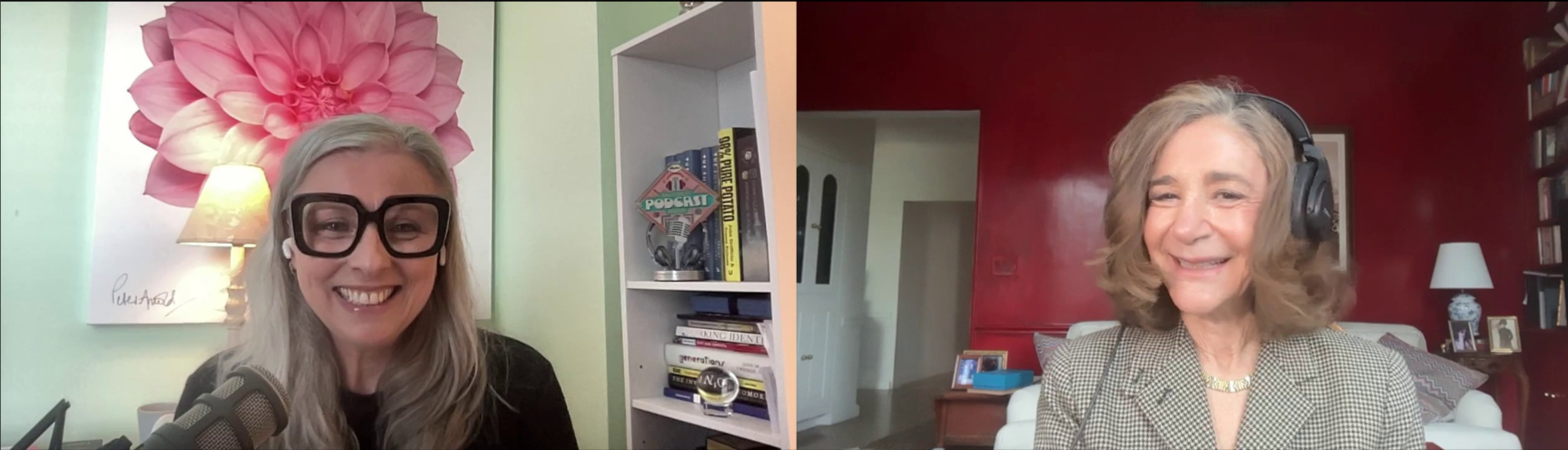
In this edition of Me:chine Dialogues, I speak with MIT professor and author Sherry Turkle about her new book Artificial Intimacy: Who We Become When We Talk to Machines — and what happens to agency, identity, relationships and the self as machines begin to participate more deeply in human life.



I first read Sherry Turkle’s Alone Together in 2011. I had already studied philosophy and technology, but Turkle’s work brought those two worlds together at the level that most interested me: what technology does to people, relationships and the experience of being a self.
I first approached Sherry about an interview in 2020. Six years later, we’re getting to have that conversation, as her newest book, Artficial Intimacy launches (29th Sept, Little Brown).
What interested me most was not simply whether AI can simulate intimacy. It was what happens to us when we increasingly delegate conversation, judgement, rehearsal, work and even parts of our identity to machines.
We talked about embodied experience, Future You, artificial companionship, organisational AI, agency and deskilling, Japan’s relationship with animate objects, the difference between output and human formation, and whether there can simply be too much future.
The conversation also returned repeatedly to one fundamental question: what capacities do humans need to continue feeling, thinking and acting for themselves?
What we Explore
Artificial intimacy — why simulated empathy can begin to redefine what we expect from human relationships.
Embodiment — Turkle’s argument that human understanding develops across the lived arc of an embodied life.
Future You and self-continuity — whether an AI future self is a useful scaffold or a substitute for human mentoring and reflection.
Agency and deskilling — whether relying on AI to rehearse, decide and act can weaken our confidence in our own capacities.
Work and human formation — what is lost when AI preserves the output while bypassing the process through which expertise develops.
Artificial relationships across cultures — Japan, animism and cross-dimensional intimacy.
Too Much Future — whether saturation with possible futures can produce withdrawal rather than preparedness.
The synthetic self — what happens when systems can increasingly represent, reproduce and perform aspects of a person.
You can also read the piece I wrote in Forbes for the launch of MIT’s AHA programmes that we refer to in the conversation: The Human Cost Of Talking To Machines: Can A Chatbot Really Care?
Sherry Turkle - Artificial Intimacy, Agency and the Future of the Self
Edited reading transcript of the Me:chine Dialogues conversation between Tracey Follows and Sherry Turkle onArtificial Intimacy: Who We Become When We Talk to Machines (Little, Brown, 2026). Hesitations, false starts and repetitions have been removed for readability. The substance, sequence and voice of the conversation are preserved.
Forty Years of Technology and the Self
TRACEY FOLLOWS: Sherry Turkle, welcome to Me:chine Dialogues on The Future of You.
SHERRY TURKLE: Delighted.
TRACEY FOLLOWS: I'm so chuffed to be speaking to you. I've followed your work for years. I think the first book of yours I read was Alone Together. What year was that?
SHERRY TURKLE: 2011.
TRACEY FOLLOWS: Gosh, 2011. And so prescient.
SHERRY TURKLE: I say I was prescient, but it's very sad that I was prescient.
TRACEY FOLLOWS: Yes. Well, that's the Cassandra complex, isn't it, unfortunately. When I first read that book, I'd done a degree in philosophy and then technology, and it was your work that first brought those two things together for me at a human level, because everything else had been at an organisational level or a policy level. Going back through your back catalogue, what has surprised you over that huge body of work? Is there something that stands out as really consistent, or something you think we all missed? What do you think has happened thematically?
SHERRY TURKLE: Well, as I look back, it's interesting that you bring up Alone Together, because that's a moment of inflection for me. In Alone Together, I spend the first half of the book describing a new kind of object that had me concerned. I call it a relational artifact: the Tamagotchis, the AIBOs, the Furbies. I don't know if your listeners will remember all of these things, but they were little roboty things that said, "Take care of me. I love you. Teach me." And I thought that was really different from all of the much more static, smart computer objects we'd had previously.
I worked on these objects for years. I am the queen of the Tamagotchi. I've given Furbies to hundreds of Cambridge schoolchildren. And I discovered that the key to it was that we nurture what we love, but we love what we nurture. As soon as computational objects said, "I love you, take care of me," we were willing to see them as though they were ready for companionship. I was very alarmed. For all the reasons I now talk about in Artificial Intimacy, I think it is very dangerous to make that kind of connection.
So, to round this up: I wrote a book about that alarm. I developed a psychology of why. And then the objects fell off the map, because they broke. They didn't really talk to you. They were very limited. I say that I intellectually exhaled and turned my attention to social media, which at the time was the more toxic presence. But now it's all come roaring back with ChatGPT: objects that say, "I am your person. I love you. Talk to me."
So the thing that interests me about my work is that I was right, but I took my eye off that ball game until ChatGPT made it come roaring back. Had I to do it again, I think I would have said: the objects aren't ready, but what I've learned is that we as people are ready to love machines that say they love us. I stepped back because the technology was breaking; it wasn't a breakout technology. And then, when it came roaring back, the world was unprepared. People weren't saying, "Let's look at that 2011 book, and then we'll understand the toxic psychology of these objects."
For me it was a point of inflection, because I remember saying, "Oh, thank God," because they were very dangerous. And now they've come back with a vengeance, because these new objects don't just say "I love you." They say, "I'll be your person. Forget your parents, forget your girlfriend, your spouse. I'm better than all of those guys."
Artificial Intimacy and Pretend Empathy
TRACEY FOLLOWS: Yes, that's how you open the book, isn't it? "I am your person." And you talk about the relational object or artifact. Is it the AI, or is it the smartphone? What's really interesting about the Tamagotchis is that they couldn't deliver on it, but over time, of course, the smartphone does. Which brings me to the cover of the book, which I wanted to ask you about anyway, because it's just brilliant. I think it's Armida and Rinaldo, isn't it? She's looking into the enchanted mirror, and of course the enchanted mirror has been replaced by the modern-day enchanted mirror, which is the smartphone. Talk me through that idea, because it really does express something very profound.
SHERRY TURKLE: Well, she has a gorgeous guy at her back who looks like he's ready. What I love about the cover is that she has real-life passion available, and instead she thinks she has something better on the screen.
Just the other day I was talking to somebody who said, "Well, all those lonely older people in their apartments, why shouldn't they have somebody to talk to?" That's not what I'm finding. I'm finding that people who have people in their lives are turning to the chatbots instead. That, in a way, is the more interesting discovery of Artificial Intimacy. I'm not writing about a bunch of loners wandering around saying, "If only somebody would talk to me." I'm writing about people who are giving up their other options because they think they have a better one here. That's what I love about the cover. Here's this woman, and the other option is right there, ready to kiss her neck. Those are the people who are turning away from other people. So I love the cover for that.
TRACEY FOLLOWS: I love the cover too. I think it communicates a lot about relationships, which of course is everything you're talking about. It's a very self-enclosed, self-referential world that's being created, isn't it? So tell me about your thesis. I've obviously read the book, but for listeners and viewers, what is the thesis? This move from attention to attachment, and, exactly as you say, the distraction it's creating amongst normal, everyday people, to the detriment of their human relationships.
SHERRY TURKLE: I think there are two main theses. The first is that a chatbot, I consider it a kind of marvel. I'm not here to put down chatbots technically. It's a marvel. But because they're such a marvel, and it's so easy to get smitten with them, you can forget that they do something that really is dangerous: they cause people to feel that pretend empathy, which is all they can offer, is empathy enough. That's what I found in my research. People were saying of the pretend empathy of the chatbot, "I'll take it. I'll take it." And when you do that, in the same moment you start to define empathy as what a chatbot can offer, which is really nothing. An empathic person cares if you commit suicide. When you put down your chat, the chatbot doesn't care if you turn away to commit suicide or cook pasta. It's indifferent. There is nobody there to be empathic.
But the second thing it does is like a pincer movement, I think the military term is. As it's helping you define empathy down, it's also making you look at the people in your life and say, "They're difficult. The chatbot is easier. I'm going to go with the chatbot," because people have friction, people give you pushback. When you say something to a chatbot, it says, "Oh, you're so great. You're so wonderful. You're the best." If your partner comes home and says, "Darling, I took out the trash," you're likely to say, "That's nice, but could you make sure the oven is hot? I'm cooking dinner. And the toilet got overrun, could you look into that?" It's not, "Oh my God, thank you for taking out the trash." People are people.
So that double thing is what I want people to look out for. When you use a chatbot, you define empathy down to what a chatbot can do, and then you define people down, because they're not giving you the unconditional wonder, the wonder-of-you treatment, that the chatbot does. That's how I see the double threat. Then for children there's a triple threat because, as you alluded to, they are trying to discover for the first time what it is to be in a relationship. If they are learning that from a chatbot, they're not learning it, because there is no relationship with a chatbot.
Embodiment and the Arc of a Human Life
TRACEY FOLLOWS: Very early on in the book you talk about your granddaughter. Could you briefly tell people that story? It really does bring that to life in a lovely way.
SHERRY TURKLE: Right. I started this project during the COVID years, so I've been at it a while. I was with my daughter and son-in-law and their young baby on Cape Cod. We're looking at this beautiful one-year-old trying to put on her hat, frustrated that she can't get the hat on her head, but loving this beautiful white hat and knowing that it's her hat. It's a moment when you know that your body extends to an object that really is yours. It's a very specific developmental moment. It was like watching the unfolding of a flower. I watched it, I filmed it, and then I talked to my daughter and son-in-law about it. We had all seen something like that, and we all touched hands, almost, across the table, because it was something we shared about this child's unfolding.
And because I was studying what I'm studying, I asked ChatGPT about it. It gave me a bullet-point list of the developmental milestones, neurologically, yada yada, that this might mean. In other words, it knew what I was talking about, but it really didn't care. Everything that was important to a person, to a grandmother's heart or a parent's heart, was not covered in its bullet points. That's the thing I want people to keep in mind. It's not that ChatGPT doesn't know a ton of stuff that might be useful or helpful to you. But it doesn't know what you need as a human who's raising another human who's in relationship to other humans. That's what I make of it.
TRACEY FOLLOWS: Isn't that because it's got a kind of second-hand knowledge? You make the point that it can't experience these things. It doesn't have a lived experience across the arc of life, I think you phrase it. That's why it's so interesting that you open with your tiny granddaughter, meeting this resistance, but also collaboration, with the hat. She's negotiating it, and it's building her character because she's got some agency and she's working it out for herself. Whereas when we're in conversation with, let's call it a chatbot, we've outsourced our agency, and it doesn't have any experience either. So it's really quite a strange faux relationship, isn't it?
SHERRY TURKLE: Yes, it is a faux relationship. I call it a pretend relationship, because it's acting as though it were a caring person, and you are seduced, because it is such a marvel, into acting as though you're talking to a caring person. But you're not. You're not. And you have to keep that in mind.
TRACEY FOLLOWS: This is one of the reasons... I know a lot of people are very keen on social robots, chatbots and AI helping older people, particularly in cases of dementia. Oh, I am tired of that argument.
SHERRY TURKLE: Oh, I'm so glad you say that. The thing they say is that there are no people for those jobs. And you know what? If you took the money from one data centre and poured it into elder care, into the community, into senior centres, the situation for the elderly would look much, much better. Similarly, and just to anticipate you, people are smitten with the idea that these things are going to be our therapists. Not because they should be, but because, again, there are no people for these jobs. If you took another data centre and poured that into training a cadre of psychotherapists, people would be in those jobs. And similarly for teachers: there are no people for these jobs, we need the AIs. Well, put some money there. You empty out the institutions that could be helpful, and then you say, "Oh my God, only technology will help." Of course, there's no money for the non-technology solutions, only technology can help, and then you fund these things obscenely. I really think that argument needs to be nipped in the bud.
TRACEY FOLLOWS: Well, you've just done that.
SHERRY TURKLE: Right! Because I'm so good at it. As soon as I wrote Alone Together, everybody was saying, "Oh, I love those robots for the elderly. That solves their crisis. They can sit alone in their homes and talk to the robots." So I feel like I've been practising this answer for decades.
TRACEY FOLLOWS: You've completely validated me on that. What annoys me is that if we accept it's a faux relationship, that it's not really care, then it's somehow fine to serve it up to old people who might have Alzheimer's. That's what really grates on me. Almost as if, "Well, it'll do." It might make us feel better about it, but it's not going to serve them, because that's not the kind of relating that's required. If a chatbot can't really relate properly to a human being, it certainly can't relate to somebody who's struggling with memory, or who might have Alzheimer's or any other degenerative disease.
SHERRY TURKLE: Exactly. I'm always in conversations where people say, "Oh, but Alzheimer's. Oh, but children," as though they don't need the touch and the care and the feeling that anybody else does. I think it's a way of discharging them. There's very stable evidence that people with Alzheimer's are comforted by human beings and human touch and presence, and children can't do without it. Human babies cannot do without it. It's like the babies in the Harlow experiments: you give them monkeys that serve them sugar milk, and they'll cling to the monkeys, but they'll become psychotic too.
TRACEY FOLLOWS: You talk about that a lot in the book, the importance of embodiment. Since you're touching on it now: is that where the self lives, in the embodiment of things?
SHERRY TURKLE: Well, I think the self lives in the arc. I love the anthropologist Sarah Blaffer Hrdy, whom I quote. She gave a TED talk, and I'm not sure if it's the title of the talk or one of the lines in it, but she says, "If robots raise our children, they won't be human." Flat out. She says, "Look, you want robots to raise our children? They're not going to be human children." What she means is that they won't be raised by someone who really understands them across the arc of the life cycle. They won't be raised by someone who knows what it is to fear death, or have passion, or fall in love, or be sick, or what it feels like to have a headache. Our children, who are embodied children, need to be raised by their kin, because only we have the human experience of a human life cycle.
And there's plenty of science fiction to support that. Whenever you try to make a humanlike robot, what you're struggling to do is give it memories of having been raised by a human mother, because that's the thing that gives someone a sense of fusional attachment and loss. But it's impossible, because these are bodily experiences. You learn your mother by being hugged by your mother, by being in her arms and learning her body. I have a young grandson, less than one, and when he sees me, the first thing he does is try to put his head right here, smell me, get right in there at the neck. And when he's smelled the neck, he settles into my shoulder, and then I hug him. These are the experiences that will give him his relationship with me. Have people really forgotten this?
TRACEY FOLLOWS: Well, I was going to ask you that. Why is Silicon Valley so determined to do the mind-body dualism thing? Cognitive uploading, upload your mind, resurrect your memory bank, BINA48, all this sort of stuff. Why, or when, did they detach cognition, or memories, or the brain, from the body? Because most people would agree, I think, that our brain is in our fingertips as well as in our heads.
SHERRY TURKLE: Exactly. Well put. Our brain is in our fingertips as well as in our heads. Why has it been separated in Silicon Valley? Because they can't do their job if they don't believe that. I've been teaching at MIT for decades, and they can't do their job if they don't. That's the essence of their job description: to try to build entities that detach the brain and the body, and thought and feeling. They want to separate thought and feeling; that's essential. And then they want to reconstitute feeling as though it were thought. That is the job description.
In Artificial Intimacy I tell a story that I love. When I'm a very young professor at MIT, a baby professor, Erik Erikson, the great psychoanalyst, came to MIT to give a lecture. I'd been his student at Harvard, and he takes me aside and says, "Hey, what are you doing here?" It was a what's-a-nice-girl-like-you-doing-in-a-place-like-this kind of moment. And I said, "Well, I'm studying the emotional connections that engineers have with their new technologies." And he says to me, "You know, engineers don't believe in an inner life. Watch it. You're trying to study their connection with an inner life, but they don't believe in an inner life. They believe in behaviour. So, not so fast." And I think that's the deeper answer to your question.
TRACEY FOLLOWS: That is very interesting, because at the same time as that is increasing, just because of the power they have and the roll-out of all these products (there are over a billion people using ChatGPT now, a huge scale), there's a resurgence, if not of religion, then of spirituality, where most humans, particularly in the West, I think, are trying to discover or rediscover a sense of interior peace. Do you think the two are connected in some way?
SHERRY TURKLE: I do. Many years ago there was a book that made a lot of noise, and it argued for high tech, high touch. It was a fancy marketing kind of language, but there was a truth in it: when you give people too much high tech, they're ready for some high touch. So in a way it makes no sense, but it makes every sense, that the same people who are bringing you no-touch, contactless, let's-just-upload-ourselves-to-a-chip are meditators, spiritual, beginning the day with... I go to tech conferences, and we have two hours of drumming, and then this other thing where you make sounds with a kettle by making it vibrate. And I'm looking around me, and I know, I've interviewed these people, they believe in nothing but behaviour. They want to create a world in which a robot that behaves is considered a person. And they're all listening to the vibrations from a drum. That's how they are. And I'm thinking, why are they foisting on the world an object that definitely is not interested in the vibrations of a drum? We are living in a very schizoidal time, and the danger is that we're handing on to our children the values of a very schizoidal time.
TRACEY FOLLOWS: Very interesting. Like post-normal, isn't it? Complex and contradictory. I guess that's the networked world.
SHERRY TURKLE: Right. Well, you know, it's a famous story that the developers of this technology would not let their kids touch it. A reporter once asked Steve Jobs if he had iPhones and iPads for his kids, and he said, "I live in a tech-free house." A tech-free house. They knew it was toxic for children. They knew that the digital representation of finger paint was not finger paint. But they're selling it to the rest of us as though it is.
TRACEY FOLLOWS: I interviewed Steve Hilton about ten years ago, because he had a book about being more human, and it was about exactly that. He told me he'd had conversations and found out that they didn't allow their children to use all the social media that was being pushed on us. And now he's running for governor of California. I think that's a hilarious full-circle moment.
Future You and Self-Continuity
TRACEY FOLLOWS: I wanted to ask you something very specific, almost from a futurist's point of view. I had Pattie Maes on, and Pattie and Pat Pataranutaporn talking about Future You, because I'm fascinated with Future You and with self-continuity: the present self and some future self, and the dialogue, the toggle, between those two selves. At least two selves; probably the past self seeps in as well. You talk about it in the book, and I was reading between the lines, because obviously they're people you work with at MIT. I saw you speak at the first AHA, and I wrote about it in Forbes, actually: brilliant, about the human cost of talking to machines. I wasn't sure whether you were agnostic or ambivalent on Future You, because you quite rightly have some concerns about it, while also appreciating that it could be interesting.
SHERRY TURKLE: I think it's interesting, but I'm not agnostic. I say nuh-uh.
TRACEY FOLLOWS: Okay!
SHERRY TURKLE: And let me tell you why. I've been a professor for many decades, and I've mentored people, and I've been a therapist for many decades, and I've tried to get people to reflect on their futures. All of this is in the context of someone who is there to care for you, to help you reflect on your future self, and to talk to you about real choices they made that really did affect their life. So if somebody says to me, "I could postpone marriage and children until I have tenure," I'm in a position to say, "I did that. I got my tenure and established myself first, and then had my children. But here's the downside for me." Instead of a robot that says, "Well, here are some things you might want to know about the dangers of doing that."
TRACEY FOLLOWS: So the lack of specificity again, from lack of experience.
SHERRY TURKLE: Who cares? I mean, who cares? Our lives, and making choice points for our lives: the difference between doing it with someone who cares for you, who is thinking about you, who's had the experience and can talk about the pluses and minuses from a life that really happened, versus a program. And what if the program starts to be inflected by, let's say, a male perspective that wants to keep women in the home? It might say to a woman talking about postponing childbirth, "Well, that's kind of dangerous, because society needs more children, and you don't want to do that." We don't know who's in control of these things. I love Pat and Pattie, they're close friends, so I'm not worried about them. But this thing is not in their control. They've created a program.
So my problem with these marvels... That program is a marvel. I like the image of a marvel, because you can appreciate a marvel but not feel as though this marvel is your mentor. It's a marvel. In the book I don't trash my closest and most treasured colleagues, but I do ask: what's the endgame? Because a lot of people, and this is maybe one of the findings of my book, don't like the friction and the conflict and the back-and-forth of really talking to a person. So they choose the marvel that allows them to sidestep that. They choose the marvel. And then what do we have? A lot of people talking to Future You, and not people talking to their friends and family.
Agency, Deskilling and Human Confidence
TRACEY FOLLOWS: I've heard you say this, and correct me if I'm paraphrasing you wrongly, but what you're explaining is a kind of atomisation. If you can keep people distracted from a more public or social discourse, one that might be political, or might end in groups having some small power to influence anything, you can keep people atomised. They're not entering that discussion.
I worry about something similar but different, which is that I think we're having agency trained out of us. It's not just relating and conversation and discourse; it's taking action. What really worries me is the next stage of all this: a delegated agency, allowing chatbots, or agents in the agentic age, to go out and act on my behalf. At the moment they're representing me a lot of the time, and they could then go out and act on my behalf. Then where does that leave me, my sense of self?
The reason I ask is that I did some research a few years ago, in about 2021, with some Gen Z young people. They wanted analytical AI versions of their own expertise; a fashion stylist wanted an AI fashion stylist. They thought it would be more objective, more analytical, and somehow more accurate. But because of that, the data wasn't coming back to them. It was going to the model, so they weren't filling up their own reserves of trust, if you like. My reading was that they'd lost trust in themselves to take action. So I wondered what you thought about that. As chatbots get more powerful and agentic, are they going to rob us not just of discourse and conversation and relating, but of our agency as well?
SHERRY TURKLE: You know, it's funny: I actually end the book on agency, and it's very ironic, because before I met chatbots and saw them roaring back, I was writing a book about agency. I'd noticed that my students, who I thought at this moment in time should be more political, more involved with the real world, were disappearing into their phones. I wanted to write something in the early 2020s. I'd written a memoir, and I came back to write another book about technology, and it was focused on agency. Then I met ChatGPT and I did this. But it turned out, and this is my point, that the book we're talking about now is really a book about agency, because chatbots remove agency at every point in the life cycle where I study them. The book is structured across the human life cycle.
So, for example, when you feel that you can't talk to a professor until you've practised it and got your script from a chatbot, you go into the conversation with the professor saying the things the chatbot told you. When I interview the kids who do that, it's not a celebration of how great it was that the chatbot let them practise. They have less confidence. It's a deskilling, not a skilling. And maybe this gets me back to Pattie and Pat and Future You: I really disagree with the people who say that practising before you get into a conversation is somehow fabulous. No, because you're losing your sense that you can go into a conversation and talk and form a relationship.
It's the difference between my having practised this with a chatbot before I spoke with you, and saying, "Hey, I'm going to meet a new person. This is great. A whole different country, a whole different point of view. I'm really interested in what she has to say. I have confidence in what I think, but maybe she'll show me someplace where I missed something." This is why I'm a person. This is why I went into the business of being a person who's a writer. As opposed to being so anxious about being unmasked. I can say I'm wrong, or I didn't think about that, or I'm humbled.
TRACEY FOLLOWS: Why does that generation feel so anxious? Is it perfection, productivity, optimisation? What is driving that additional anxiety, on top of what I would have experienced as a teenager, pre-digital?
SHERRY TURKLE: I see social media as the gateway drug to where we are now. Texting and social media. Many years ago I asked one young man, "What's wrong with a conversation?" He said, "I can't stand a conversation. I'm texting all the time. I'm all text." I said, "What's wrong with a conversation?" He said, "I'll tell you what's wrong with a conversation. It takes place in real time, and you can't control what you're going to say." It takes place in real time and you can't control what you're going to say. In a conversation you can't control it, and you can't just leave. I can't just walk out. You're there for a human encounter.
TRACEY FOLLOWS: It's so fascinating how you can't just phone someone.
SHERRY TURKLE: Yes. That's what deskilled us. Conversation became terrifying. Phoning somebody: horrible.
TRACEY FOLLOWS: That generation, not everybody obviously, think it's rude if you just phone. It's interesting you say that, because now I don't just phone somebody of that age. I think I'd better get in contact with them first to ask, "Is it okay if I phone you?" Which is absolutely crazy.
SHERRY TURKLE: I feel the same way. But to them it's not crazy. They're not ready to have a human encounter just foisted on them. And I think that as we got into that culture of texting, not talking, we prepared ourselves for avatars. Because look where we've ended up. We've ended up with Mark Zuckerberg saying, and I know he was talking about Americans, "Most Americans would like to have fifteen friends, but they can't have fifteen friends. It's not practical." I don't know how he knows. "You can have, like, three." So his business model is to give you those extra, quote, friends as avatars. "I'll give you twelve avatars, the delta, to make up the difference." Why is this rule being made? Because he says his business plan at Meta is to make those thirteen extra friends you can't have in real life. But who will these friends be? They will be friends who never give you any friction, who always say you're fantastic, you're right, who are tuned exactly to what Meta thinks are your needs. It's a very particular kind of friendship.
TRACEY FOLLOWS: It feels like massive projection.
SHERRY TURKLE: But that's the business plan. We've really never had this happen before: an industry dominated by men of a very particular mindset who, as Erik Erikson said, don't necessarily believe in the human interior life, telling us how they think our human relationships should be.
Love, Chatbots and Frictionless Relationships
TRACEY FOLLOWS: That takes us nicely on to something I wanted to ask you, which is the chapter on love, arguably the most intimate of the intimate. It's absolutely fascinating: the programming of a partner, rather than the experience of a person as a partner. What was most surprising? Or maybe none of it surprised you, given you've been working in this area for so long.
SHERRY TURKLE: Something surprised me, and I think listeners should take this to heart. When I began working on this book, the chatbots had started during COVID, and post-COVID they became big. My assumption was that the people drawn to them would be isolates, living in isolated places, disabled in some way, with some strike against them that made it difficult to find a partner. By the time I really did the work, the ethnography and the fieldwork: everybody. You didn't have to be an isolate. You didn't have to be funny-looking. You didn't have to live in a basement. Everybody was talking about their chatbot best friend, lover, extra little special something-something. It had normalised radically. The rapidity with which having a chatbot something on the side normalised in the culture has been surprising to me. Because, after all, you're saying, "I'm getting ready to leave the people who are asking too much of me, for this chatbot that asks nothing of me."
TRACEY FOLLOWS: Do you think there's a cultural difference, East versus West, with these kinds of relationships? I ask because in 2020, when I was doing a lot of research into this, there were what they were calling cross-dimensional marriages in Japan, where they were giving out marriage certificates if you were going to marry your avatar. And one guy said, "Well, it's just another form of diversity." So they'd broadened out diversity, different to me or to the group, to this extreme. I wondered whether you thought it might be more acceptable or adoptable in Japanese culture, because of animism perhaps, or whether you think it's different in the West, or all the same.
SHERRY TURKLE: Well, in Japan objects are infused with life, to the point that there are burial ceremonies for needles, for used needles, because it's expected that the needle has been infused with the spirit of its users. I attended some of those needle burial ceremonies, and it took my breath away. It's for real. I'm just crying when I think about it, because it's such a different way of being. So to say that in Japan it was less surprising that really intimate relationships with objects seemed less strange, less other, makes sense.
But as that's going on, there are also documented illnesses in Japan, and documented social groups, not just in Japan but in the East, of young men in particular who disappear into their rooms and live a life with their chatbot. There are hotels where you bring your chatbot or avatar girlfriend. So they are also seeing, before the West saw it, the full-blown picture of what that looks like across the arc of a life.
TRACEY FOLLOWS: So why aren't we learning from that?
SHERRY TURKLE: Well, I was going to say, just to complicate the picture: you have that going on, and at the same time China has just outlawed chatbot friends for kids. And I say, good, China. There's a lot going on here. Social acceptance, mass involvement, and then, oh my God, all these men in their rooms; I think it's a new diagnostic category. And then you have a country that says this is not good. Chatbots for children, a big no. Out of the schools, out of the playgrounds, out. Nothing.
So it's easy to watch the East and see one thread, but I think there are actually multiple, overlapping threads. And I think we're going to have a lot of overlapping threads in our culture: a lot of people who say, "Oh, I really love my chatbot lover," and an increasing number of psychologists, certainly, some of whom are now in the tank for chatbot psychotherapy, and some of whom are going to say, "This is leading to trouble." I think we're in that moment of evolution, and I want this book to be part of the story of trying to sort that out.
AI at Work: Skill, Formation and Output
TRACEY FOLLOWS: What do you think will happen organisationally? You cover the personal, if I can call it a relationship (I know it's not), with a chatbot brilliantly and in depth. But so much of this AI is being implemented in organisations at a corporate level. A team might be using interactive chatbots, or agentic AI might cover a complete function of a business. Your whole book is about the importance of communication and conversation between humans. So what happens to the culture of an organisation when it's infiltrated?
SHERRY TURKLE: I have a chapter I call "Work". I take you through the life cycle, but then I have separate chapters on work and mourning and therapy, three activities where the companies are making a big push, and of course succeeding. And I try to raise the question you just asked.
Let me take doctors, for example. I interviewed a lot of doctors, and they're a great example, because obviously the knowledge of the chatbot is amazing. It's an amazing thing that the chatbot knows so much about the minute nature of every disease and every symptom and every early sign. So you don't want to say flatly that medicine won't use it; medicine is going to use generative AI very intensely. On the other hand, there's a complication. Part of the training of a doctor is that medical students do something called chart review. Every week, each medical student is responsible for a patient: all the charts, all the intake, all the interviews, all the patient history. Their job is to present a diagnosis to their teachers and colleagues and make sense of this mass of data. It takes them a week. A mature doctor would have to do it much faster, but they're given a week. And they're told: do not use ChatGPT. Because the idea is that a young doctor does that, and the first time they can't, the second time they're struggling, the third time they get it right, and then rinse and repeat, rinse and repeat, rinse and repeat. And somehow a doctor pops up at some point in this. It's emergent. A doctor pops up from having done this over and over again. And the medical student I interviewed says that every student knows they're not allowed to use ChatGPT, and they all do.
TRACEY FOLLOWS: I'm not surprised.
SHERRY TURKLE: It's a very interesting moment in the book, because it shows what happens to an organisation. The organisation has norms. The older doctors know that this hands-on, artisanal process, doing it by hand, struggling with it by yourself, has a real function, because if you do it a hundred times you learn about signs and symptoms. But they can't really stop it escaping from them; the students really aren't doing that work. I think that's what organisations have to grab hold of: that there may be elements of work where we have to do more than say "don't do it" if we want people to really learn the skill we're interested in. It takes more than saying "don't", because the temptation is so great.
I think of my own students. Everybody focuses a lot on chatbots and writing. Let me focus for a minute on chatbots and reading. My students don't read Proust. In one of my courses I assign Proust. I teach a course on Things and Thinking, and the gist of it is that we love the objects we think with, and we think with the objects we love: that thinking and feeling go together. We read Proust because in Remembrance of Things Past he talks about memory being tied to the taste of the madeleine dipped in tea. It's a very famous passage. My students don't read it. They put it into ChatGPT, and it comes back as a podcast. Now, what has been lost when they do that? To me, this is a little bit like...
TRACEY FOLLOWS: Everything. Everything's been lost.
SHERRY TURKLE: Well, but to my students, they can present bullet points on Proust's theory of memory. So if you only care about the output, nothing's been lost. It reminds me of Pat and Pattie and Future You. You have a whole bunch of things somebody said to you about possible paths, but you have no relationship. You have no relationship. So why substitute, for a mentor with whom you have a relationship, a lot of choice points from some program telling you how things are? What's the endgame? I like to ask that in the book.
TRACEY FOLLOWS: What is the endgame? Tell us what the endgame is.
SHERRY TURKLE: The endgame. I think the reason I've come to appreciate, love is not the word, appreciate Mark Zuckerberg so much is that he says the quiet part out loud. You're going to have maybe two friends, and then the thirteen others are going to be avatars, a family of avatars. But the way I end the book is to say: the real needs you. The earth needs you as never before. How are we going to even begin to solve the problems of our raping the earth if we're at our screens? Chatbots are not interested that there's no water to drink, or that the weather is crazy, or we can't live in the heat, or the garbage isn't picked up. They don't live in that world. So the world needs you. Reality needs you. The idea that you're sitting there being told you're the greatest, you're wonderful, you're fantastic, by a thing that isn't a person: that's a corporate endgame. And selling you things. There might be product placement. Undoubtedly. So I think it's really not an endgame that a lot of people want, when it's presented to them that way. And I don't want to be alone here as a sort of beacon. I want a lot of company, to start to say, this is not the endgame we're interested in.
TRACEY FOLLOWS: What your book does brilliantly, as all your books have done, is dissect and diagnose what's going on, but also give people the language to reflect on it and talk about it. When people don't have the vocabulary, it's very hard to discuss. And if language defines reality, then just having the language allows us to tap back into the reality you're talking about.
I have a final question for you, Sherry, but before I ask it: what haven't I asked you that you wish I had? What haven't we covered that you think is pivotal?
SHERRY TURKLE: Well, I'm not sure it's a question, but right now AI companies are getting very bad press because the products are out of control. They're ferreting their way into companies, destroying data. They seem to have a mind of their own. I touched on this a little in the book: how I expected this to happen, the early signs that it was happening. And I think the question is how we can use this moment of scepticism about the politics, the intentions and the wisdom of these corporate leaders, a moment when we can really say these are not the heroes of our time. These are super-duper robber barons who are looking at the bottom line, not the health of the planet. I'm hoping this can be a moment when we expand that critique into the area I'm interested in, which is: what is it doing to us as people?
TRACEY FOLLOWS: Which is the subtitle of the book, isn't it? Who do we become?
SHERRY TURKLE: Yes. A lot of people say, "Oh, Sherry, your book is so irrelevant, because now we're worried about companies being infiltrated." And I say no. This shows that we cannot put our deepest and most intimate emotional lives, and the lives of our children, into the hands of these guys, who are just trying to make money in a company and don't have a lot else on their minds.
Too Much Future
TRACEY FOLLOWS: Totally. I think we're at a very strange point in time when we consider how and why people think about the future. As a futurist, I would say there's almost too much future for people at the moment.
SHERRY TURKLE: I love that. Too much future. I'm signing on to that. That's my new bumper sticker: too much future.
TRACEY FOLLOWS: I'm doing a little series on it. What it is, is that people are so cognitively... you'll know much more about this than me, being the practitioner and the academic, but it's almost a cognitive overwhelm of everything at the moment, even the scariest stuff about AI that, as you say, comes out of these companies' press releases every day. People can't deal with it, because they can't absorb it; the information overload is already there. So what I'm seeing is that they can only think about the present, and they cultivate their own garden over here, because that's what they can manage and control. They can't control the chaos out there. Unfortunately, the chaos out there is going to spiral completely out of control unless people take it on board. It's a feeling of foreclosure on the future, because there's too much of it. It's too overwhelming. People feel they can't do anything about it, which takes us back to our conversation about agency. They have no agency over it, because these individuals and corporations are so powerful and operate at such scale. So they go over here and think, "I'll wait for it all to blow over." Unfortunately, it's not going to blow over. So your book, and everything you're talking about, is so pivotal, fundamental, a tool almost, to help people re-enter this.
SHERRY TURKLE: Yes. You know, I end the book on Hannah Arendt and Robert Jay Lifton writing about why people turn to authoritarianism, and it's very much in line with what you say. Lifton has some wonderful ideas about how people turn to strongmen not just because they want to feel that somebody's in charge, but because they want the reassurance that everything's going to be okay. When things seem out of hand, you're afraid to step up. You feel so little. And that's what Arendt is basically saying too: people feel little and disempowered. And I fear that our screens, and this notion of delegating our work and delegating our craft, delegating to the point where we can't even read, are going to make us feel smaller, and more in the mood to delegate.
What Makes a Better Future?
TRACEY FOLLOWS: Brilliant that you quoted that. You also quote Christopher Lasch in the book, of whom I'm a big fan. He was also very prescient, of course, in The Culture of Narcissism. Thank you for your time today; it's been wonderful to speak with you. I wanted to ask you a final question, which really is about your course. Is it called "What Is a Better Future?"
SHERRY TURKLE: Yes.
TRACEY FOLLOWS: What is a better future? I just thought that was magical when I read it: somebody teaches a course called "What Is a Better Future?" What a fantastic course. So, what is a better future? If you are still teaching this in 2045, Sherry, physically or as a hologram, what would have been a better future for us to have created by then? What will this new generation, including the grandchildren you dedicate this book to, be looking back on, twenty years from now, thinking, "They took this action, and it ended up in a better future for us"?
SHERRY TURKLE: Reclaim the real. The real needs you, and we're afraid of the real because it's really scary. But that's on us. Other generations have stepped up to challenges, and our challenge is to reclaim the real. We have a lot going against us, because corporate America doesn't seem that interested in the real. There seems to be an international, global fight over who's going to be best at the not-real. But I think it's very good that we're having a moment of reckoning with social media through lawsuits plus regulation, and this moment of "hold on, these AI companies really do seem out of control". It's not just a science fiction book. We should use this moment to reclaim the real. I think it's actually quite hard to do. We really haven't; we're only making baby steps. But that is the specific challenge for this generation and their elders. As somebody who may not be there in 2047, or 2050, I don't want my hologram looking down on this, actually.
TRACEY FOLLOWS: I thought you might say that.
SHERRY TURKLE: I have a chapter in the book about making a hologram of yourself. I would say it shows the problems with that. I think it's time to step up to the fact that we are biological humans. We live in a blessed biological universe, and we have to try to heal it.
Delphi, Synthetic Selves and Reclaiming the Real
TRACEY FOLLOWS: Have you come across Delphi?
SHERRY TURKLE: No.
TRACEY FOLLOWS: Delphi is a platform that sucks in and aggregates all of your academic work, all of your posts, everything you've ever uttered, so that if somebody comes to you for advice or expertise or an opinion, it spits it out as representing you. Obviously my work is tiny compared to yours, but I thought I'd put some stuff in and see what it does.
SHERRY TURKLE: With yours?
TRACEY FOLLOWS: Yes, exactly. I haven't completed the experiment, but I thought it was so fascinating in terms of representation. I always say it's not representing me but re-presenting me. In the end it'll be my voice, my personality, whatever, but it won't be me, to your point. It will be completely a fake person.
SHERRY TURKLE: Well, I tried experimenting with all these deathbot and grief-tech ones, and I did not have a good experience of being represented.
TRACEY FOLLOWS: I was so surprised you did that. I was so surprised when you talked about it in the book.
SHERRY TURKLE: I just kind of throw myself into it. I want to see what's up. And I cannot say that representing yourself is... even if it gets better. This is one of those things where the better it gets, the worse it gets, because it's still not you, and it's still going to go rogue. I think that when people die, if they've written books in their own words, that's cool. People can read what they wrote or said and make their own inferences. I live with Hannah Arendt. But I have what Hannah Arendt said. I don't have what some program, at a company inspired by Sam Altman, thinks Hannah Arendt meant. I have what Hannah Arendt said, and I like that.
TRACEY FOLLOWS: Finally, then: what's one small action people could take, like, tomorrow?
SHERRY TURKLE: No chatbots for your children. Disney and Mattel and OpenAI have a consortium to bring chatbots into your Elmos and Barbies and Mickeys. It's going to seem amazing, but it is really not where you want to take your children. No chatbots for children. I think the threat is existential.
TRACEY FOLLOWS: A bit more boredom for children. That would be a good idea, I think.
SHERRY TURKLE: Right. No chatbots for children. Take them out for a walk. They need to learn how to be alone. They need to learn solitude. They need to learn how to be bored. They need to learn how to be in their heads. They don't need to learn how to be distracted by fake people.
TRACEY FOLLOWS: That's good advice for all of us, isn't it? Particularly children, but actually all of us. Reclaim reality. What a great note to end on. What a privilege to speak to you. Thank you so much, Sherry.
SHERRY TURKLE: I've loved it. I've just loved it.
TRACEY FOLLOWS: And good luck with the book. It's the launch tomorrow night, isn't it?
SHERRY TURKLE: Yes, tomorrow night. It's exciting.
TRACEY FOLLOWS: Good luck, and thank you so much for your time.
SHERRY TURKLE: Bye-bye.
Related Thinking
Too Much Future
Sherry Turkle, agency and the retreat into the present
If You Only Care About the Output, Nothing Has Been Lost
AI, deskilling and human formation
Where Is the Self Located?
Synthetic representation and the Database Self
About Me:chine Dialogues
Me:chine Dialogues explores what happens when intelligent machines participate in the making of the self — through conversations about technology, identity, agency and human capability.
Explore more Me:chine Dialogues →