


Books, Essays and Ideas
Tracey Follows’ books and written contributions explore how technology changes identity, agency and the human future.
From The Future of You to essays and selected chapters on AI, digital identity and human–technology relations, this page brings together the published work that sits behind Futuremade’s research, broadcast and advisory practice.
Published Books

The Future of You : Can your identity survive 21st Century Technology? (2021)
The Future of You examines the impact of artificial intelligence, data systems, biometrics, and platform technologies on how we define and present ourselves — socially, biologically, and digitally. It sets out the emerging identity challenges of the 21st century and argues for more conscious, informed participation in technologically mediated life."This has to be one of the most interesting books I’ve ever read” - Amazon Reviews 4.3/5 *****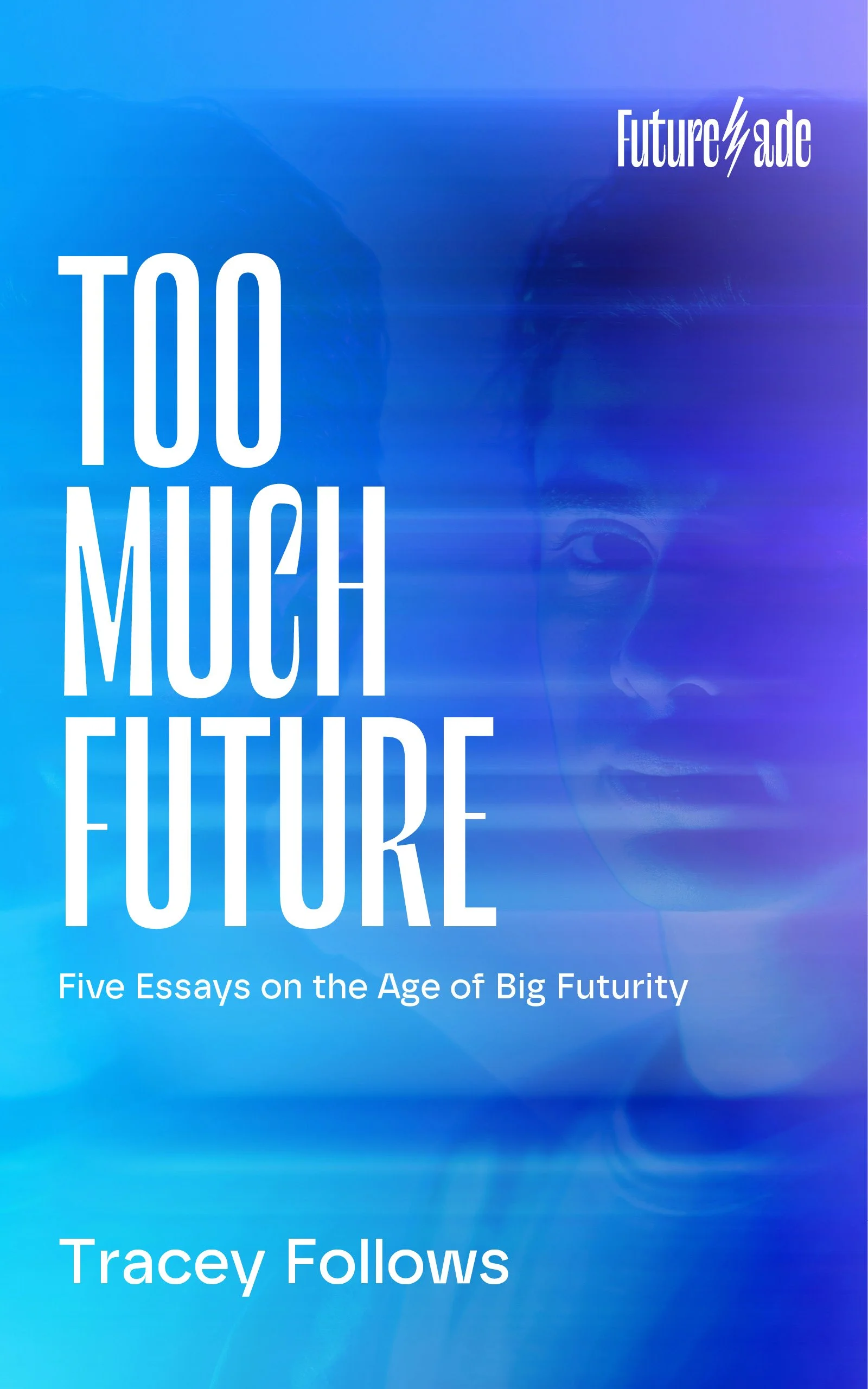
Too Much Future : Five Essays on the Age of Big Futurity (2026)
In Too Much Future, Tracey Follows asks whether our obsession with predicting tomorrow is diminishing our freedom to imagine it. Across five short essays, she explores Big Futurity: the industrial production and relentless circulation of forecasts that shape what feels possible. Drawing on philosophy and System & Self, she asks who gets to author our future.Available as PDF or EPUB. Also available on Kindle
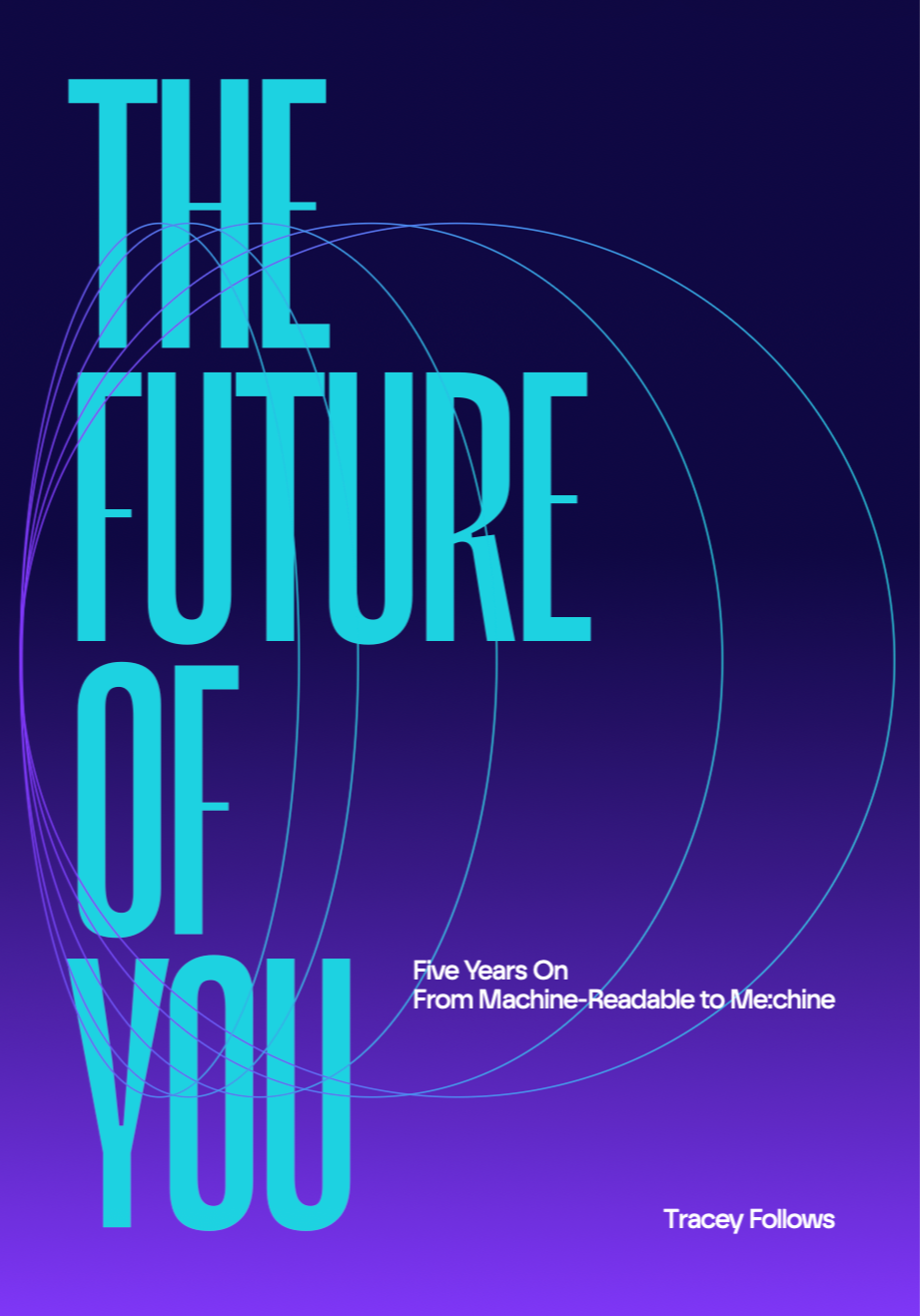
The Future of You Five Years On : From Machine-Readable to Me:chine (2026)
Five years after The Future of You, Tracey returns to the question of selfhood in the synthetic age, to reflect on, and explore where, the future of the self is now heading. Drawing together award-winning podcast conversations and new essays that bridge The Future of You and Me:chine, she covers six themes for today's and tomorrow's world: Available as PDF or EPUB. Also available on Kindle

98% Pure Potato : The origins of advertising account planning as told to us by its pioneers (2016)
Co-authored with John Griffiths, this book explores the history and evolution of advertising and brand communication, as told by the pioneer planner in their own words. It examines how commercial storytelling and persuasion developed in the Mad Men era and where it is headed today.“A fascinating look at a piece of advertising history, well told. You simply must read this book” - Amazon Reviews 4.6/5 *****Essays & Contributions

The Sovereign Self : in Five Critical Essays on AI (2025)
FIVE CRITICAL ESSAYS explore the general discussions affecting, inter alia, design, architecture, culture and politics. Taking a leaf out of EP Thompson’s review of New Society, the 1960s cultural review magazine, the aim is to offer ‘hospitality to a dissenting view (as) evidence that the closure of our democratic traditions is not yet complete.’
Defending The Digital Self : Academy of Ideas, Letters to Liberty (2022)
A look at the future of a new, digital life and asking what challenges it might pose to our freedom. Rather than allowing oneself to become fragmented we could protect our digital sovereignty by taking ownership of our data. Is a Digital Bill of Rights the vehicle to help us prioritise our digital liberty - and embrace this new world?
Disrupting Identity: Applying CLA to the Ongoing Digitization of the Self : Journal of Futures Studies (2023)
Is identity the issue of our age? This paper argues that the Age of Authenticity is giving way to the Age of The Complesx Self. It sets out three future-self scenarios, the Self in Crisis, the Distributed Self and the Complex Self, and applies Causal Layered Analysis to map the shift from a fixed identity towards a fluid, plural one. 
We All Work For Lumon Now: All Data is Identity Data in the Age of the Database Self (2025)
Using Severance as its lens, this talk argues that the line between work data and personal data has collapsed. In the age of the Database Self, every behavioural trace becomes identity data, and the self we are known by is increasingly the one assembled by systems rather than the one we present.Citations & References
Tracey's books, research and original frameworks have been cited, discussed and featured in academic publications, institutional research and the work of other thinkers.


